Import Regulation and Public Finance Compliance in Ethiopia: Legal Implications of the Ministry of Finance Directive
In Ethiopia, trade law alone does not govern import regulation. Public finance law, budget accountability, and regulatory compliance also shape it. A recent directive issued by the Ministry of Finance, pursuant to Proclamation No. 586/2018 (Article 12(1)), reinforces a critical legal principle:
All public institutions and entities must use public funds, including those for imports, strictly for their approved purpose and in full compliance with financial laws.
While the directive appears administrative, its legal impact is far-reaching. This directive directly affects public institutions, private importers, NGOs, and foreign investors, especially when they finance imports through government budgets, incentives, or duty-free privileges.
Understanding the Ministry of Finance Directive
The letter clearly emphasizes:
- Budgeted funds must only be used for their approved and intended purpose
- Unauthorized expenditures including improper imports are prohibited
- Institutions must strictly follow financial and procurement procedures
Legal Interpretation
Although the directive does not explicitly focus on imports, its application is unavoidable in practice: Any import financed through public funds or special schemes must comply not only with trade law, but also with public finance law.
Import Regulation in Ethiopia: The Legal Framework
Import activities in Ethiopia are regulated to:
- Protect foreign currency reserves
- Safeguard public health and national security
- Ensure alignment with national economic priorities
- Promote transparency and accountability
For public institutions and projects: Imports must directly correspond to the approved budget or project purpose.
Prohibited and Restricted Imports
Ethiopian law distinguishes between different categories of imports:
Prohibited Imports
These goods are strictly banned, including:
- Illegal drugs and harmful substances
- Counterfeit products
- Environmentally or socially harmful goods
Restricted Imports
These require permits or regulatory approval, such as:
- Pharmaceuticals
- Chemicals
- Telecommunications equipment
- Agricultural inputs
- Security-related materials
Connection to the Directive
Even when goods are legally importable: They become unlawful if imported using funds or purposes that violate the approved budget.
Imports by Foreign Investors and Organizations
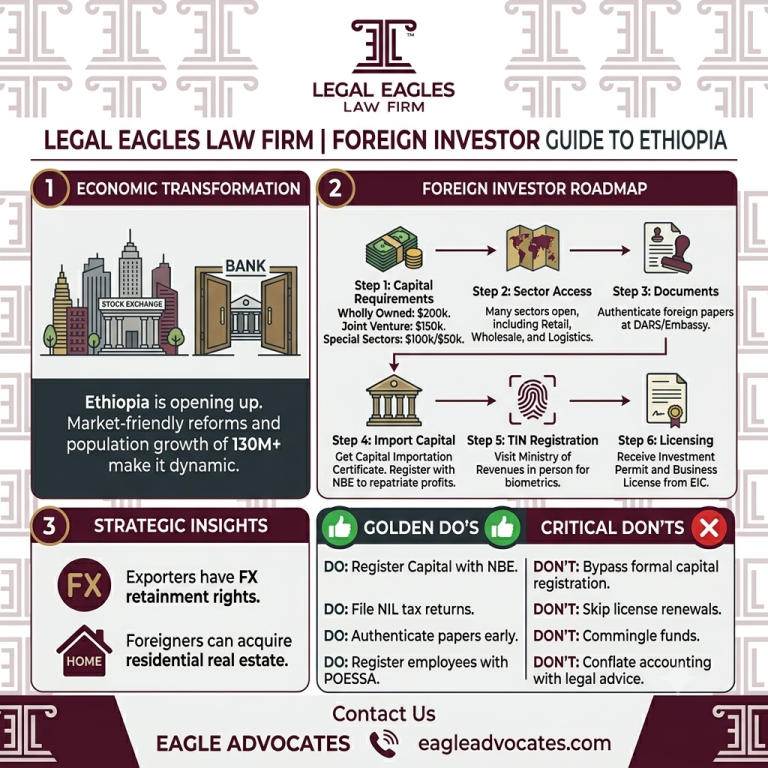
Foreign investors and international organizations play a major role in Ethiopia’s import sector.
Investment-Related Imports
Foreign investors may import:
- Machinery and capital goods
- Raw materials
- Operational assets
Often with benefits such as:
- Duty-free privileges
- Tax incentives
Legal Limitation (Reinforced by the Directive)
These imports must:
- Be directly tied to the approved investment project
- Be used strictly for the intended purpose
Misuse such as reselling duty-free goods or diverting them violates not only tax law but also public finance regulations highlighted by the Ministry of Finance.
Public Institutions: Strict Limits on Import Activities
The Ministry’s directive is particularly strict for government bodies:
- Imports must fall within the institution’s mandate
- Procurement laws must be followed
- Budget allocations cannot be diverted
Practical Example
If a government institution receives a budget for health services, importing unrelated goods (e.g., commercial electronics) would constitute:
- Misuse of public funds
- A violation of financial law
- Potential grounds for administrative or legal action
The Hidden Risk: Abuse of Import Schemes
The directive indirectly addresses a widespread issue:
Misuse of Import Privileges
Some entities:
- Import goods under duty-free or public programs
- Divert or sell them for unintended commercial purposes
Examples include:
- Using project funds to import unrelated goods
- Misclassifying goods to gain customs advantages
- Selling duty-free imports in the local market
The Ministry’s message is clear: This is not just improper it is unlawful under public finance law.
Legal Consequences of Non-Compliance
Failure to comply with both import and financial laws can result in:
- Administrative sanctions
- Personal liability for officials
- Audit findings and recovery orders
- Customs seizure of goods
- Tax penalties
- Revocation of import or investment privileges
- Criminal liability in serious cases
Where Import Law Meets Public Finance Law
A critical legal insight highlighted by the directive is this:
- Import law regulates what can be brought into Ethiopia
- Public finance law regulates how funds are used for those imports
How to Stay Compliant
To avoid legal and financial risks, institutions and businesses should:
✔ Ensure imports align with approved purpose or project scope
✔ Obtain all necessary licenses and permits
✔ Follow procurement and financial procedures
✔ Maintain proper documentation
✔ Conduct regular legal and compliance audits
Legal Eagles Law Firm Insight
As a leading law firm in Addis Ababa, Legal Eagles Law Firm provides expert advisory on:
- Import and customs compliance
- Investment and foreign business regulation
- Public finance and procurement law
- Regulatory risk and compliance strategies
We help clients navigate the complex intersection between trade law and financial accountability, ensuring that every import transaction is legally compliant, strategically sound, and risk-free.
Final Takeaway
The Ministry of Finance directive sends a strong legal message:
Compliance is not only about what you import but why, how, and under what authority you import it.
In Ethiopia today:
- A permitted import can still be unlawful
- If it violates budget purpose, financial law, or regulatory conditions