A First-Time Investor’s Guide to Ethiopia’s New Capital Market
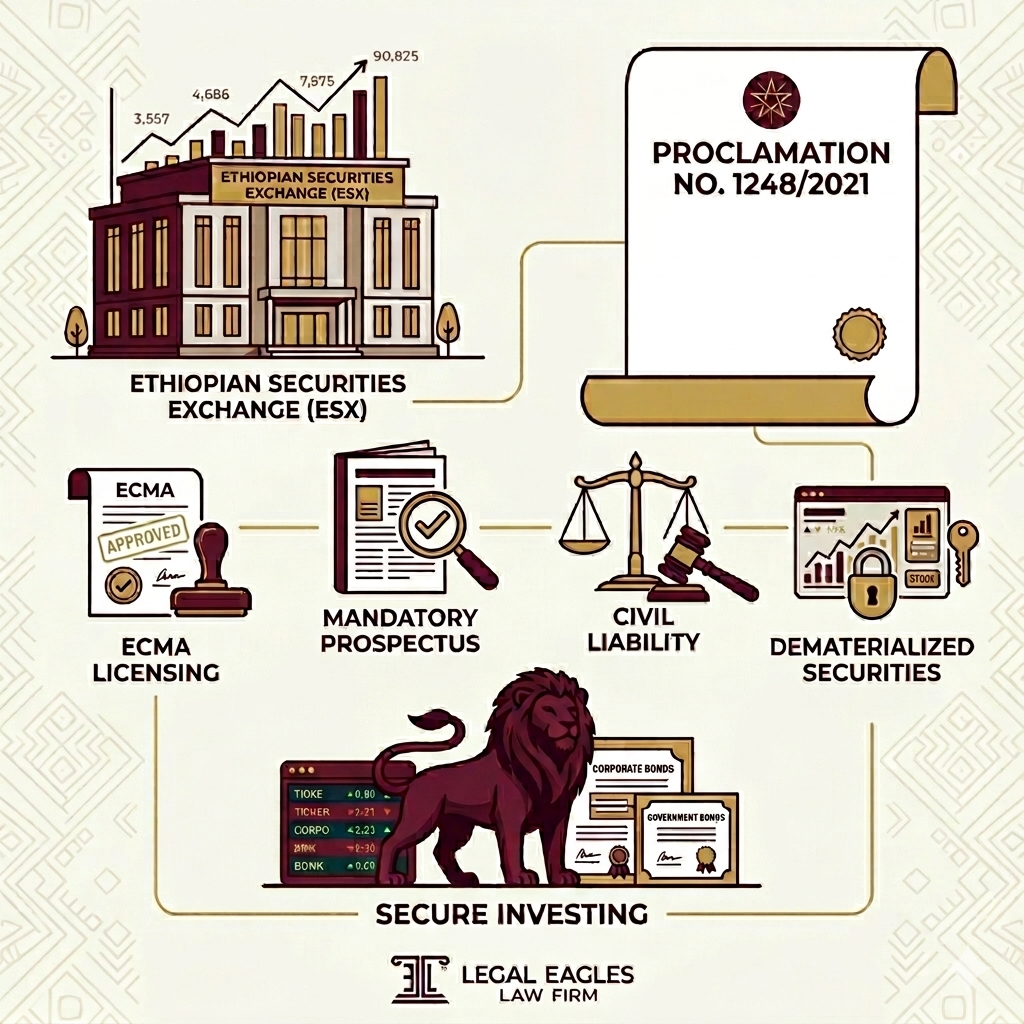
Ethiopia is undergoing a historic financial transformation. With the launch of the Ethiopian Securities Exchange (ESX) and the active regulation of the Ethiopian Capital Market Authority (ECMA), the country has opened a brand-new frontier for domestic and international wealth creation.
For first-time investors, this represents a ground-floor opportunity. However, entering an emerging capital market requires a careful blend of enthusiasm and strategy.
Here is what you need to know about how this new financial ecosystem impacts the broader Ethiopian economy, and the essential precautions you must take before deploying your capital.
1. How the Capital Market Impacts the Broader Economy
A mature economy cannot rely solely on traditional bank loans to grow. The introduction of a formal capital market serves as a macroeconomic engine for Ethiopia in several critical ways:
- Unlocking Local and Foreign Capital: Historically, public share companies in Ethiopia raised funds via fragmented, unregulated public networks. The ESX centralizes this process, matching businesses that need capital with investors looking for returns.
- Boosting Corporate Transparency: To list on the exchange, companies must transition away from opaque financials. They are legally required to undergo rigorous independent audits and make regular public disclosures, raising the standard of corporate governance nationwide.
- Providing Liquidity: Before the ESX, if you owned shares in a local bank or insurance company, selling them meant finding a private buyer manually. A formalized secondary market allows investors to buy and sell securities rapidly, injecting much-needed liquidity into the private sector.
- Accelerating Privatization and Infrastructure: The capital market gives the government a transparent platform to partially privatize massive state-owned enterprises (SOEs) and issue government bonds, funding infrastructure without heavily increasing 77external sovereign debt.
2. Essential Precautions for First-Time Investors
While the long-term outlook is promising, entering an early-stage market means you must be proactive about risk management. If you are investing here for the first time, keep these precautions at the top of your mind:
Verify Licenses via the ECMA
Do not hand over funds to any entity claiming to be a broker or investment advisor unless they are explicitly licensed by the Ethiopian Capital Market Authority (ECMA). The regulatory body regularly issues official Capital Market Service Provider (CMSP) licenses to investment banks, brokers, and advisors. Double-check their official registry before initiating a transaction.
Understand the Dynamic Regulatory Framework
Ethiopia’s financial landscape is evolving rapidly. From liberalized foreign exchange retention rules to evolving directives on Collective Investment Schemes (CIS) and public offerings, compliance rules change frequently. Ensure your legal and financial advisors are fully up to date on the Capital Market Proclamation No. 1248/2021 and subsequent ECMA directives.
Be Mindful of Initial Liquidity Constraints
As a young market, trading volumes on day one will naturally be lower than in established global hubs. Do not invest capital that you might need to pull out immediately. Diversify your portfolio across different asset classes such as equities, corporate bonds, or government Treasury bills to mitigate liquidity risks.
Base Decisions on Dematerialized Securities and Formal Disclosures
Say goodbye to old-school physical share certificates. Ethiopia is moving toward the dematerialization of securities (storing shares electronically via a Central Securities Depository). Ensure that any shares you buy are properly registered electronically and that your investment decisions are guided by formal prospectuses rather than word-of-mouth hype.
Summary for Investors
The establishment of Ethiopia’s capital market is an economic milestone that bridges the gap between ambitious enterprises and strategic investors. By doing your due diligence, verifying regulatory compliance, and taking a long-term view, you can safely position yourself to share in the country’s landmark economic rebirth.
Disclaimer: This article is for informational purposes only and does not constitute formal legal or financial advice. Investors should consult with licensed financial professionals and legal experts before making investment decisions.