Employment Termination in Ethiopia: Legal Guide
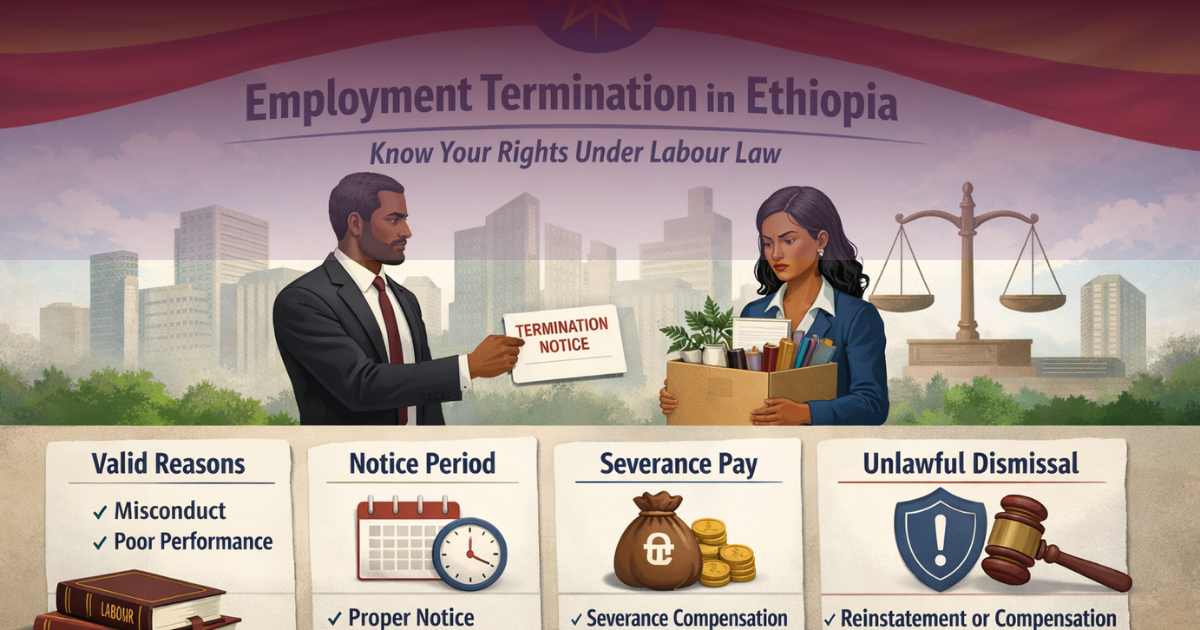
Termination of employment in Ethiopia is strictly regulated under labour law to protect both employers and employees. Understanding the rules helps avoid disputes, penalties, or compensation claims.
- Types of Termination
- By Agreement: Mutual consent between employer and employee; should ideally be in write.
- By Employer: Must be based on valid grounds like serious misconduct or poor performance. Unlawful termination can lead to reinstatement or compensation
- By Employee: Resignation requires written notice; failure to give notice may create liability.
- Redundancy/Organizational Reasons: Termination due to restructuring or downsizing requires objective selection and payment of severance.
- Notice Period
- Statutory notice is mandatory unless termination is for serious misconduct.
- Employers may pay in lieu of notice.
- Final Entitlements
Employees are entitled to:
- Outstanding salary
- Payment for unused leave
- Severance (if applicable)
Failure to pay can lead to legal claims.
4. Unlawful Termination
Occurs when there is no valid reason, due process is ignored, or discrimination occurs. Remedies include:
- Reinstatement
- Compensation for lost wages
- Tips
Employers: Document disciplinary actions, follow due process, issue written notices.
Employees: Keep records, respond formally to actions, seek legal advice if unfairly terminate
Bottom line: Employment termination is a legal process, not just a managerial decision. Both parties should understand their rights to avoid disputes.