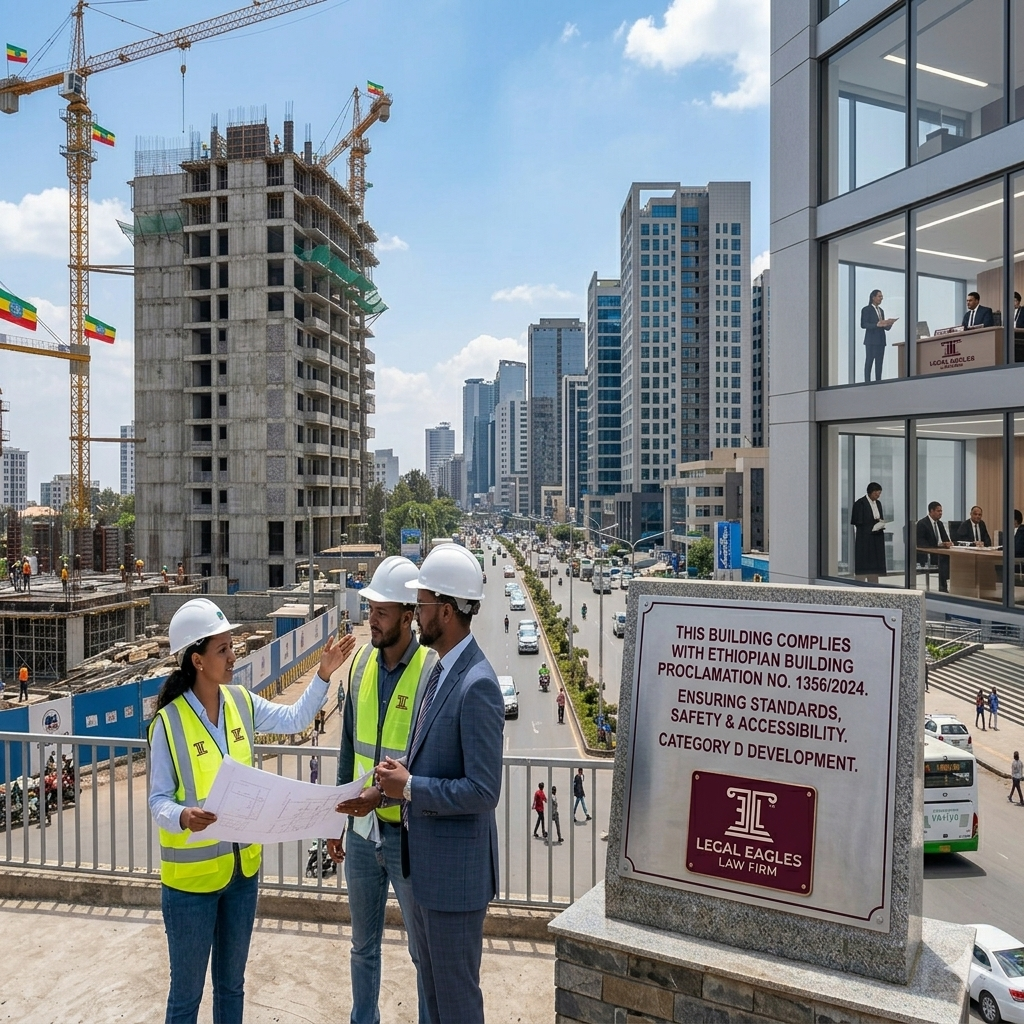
Risk, Compliance and Capital: Why Proclamation 1356/2024 is the New Standard for Ethiopian Real Estate
Capital investors in Ethiopia’s built environment now face the most significant regulatory shift in fifteen years. Building Proclamation No. 1356/2024 has officially replaced the 2009 standards moving the industry toward a high-accountability model.
For the developer or institutional investor, this isn’t just about code compliance it is about asset protection and long-term valuation. Here is how the 2024 law reshapes the investment strategy.
1. The Category D Threshold (Article 2/12)
The proclamation introduces a risk-based classification system that moves away from the “one-size-fits-all” approach of the past. For major commercial and residential developments, the focus is squarely on Category D, as defined in Article 2, Sub-article 12.
This category covers buildings over 12 stories, structures with 5 or more basement levels, and high-span structures. Category D mandates rigorous oversight and “Tier 1” professional involvement. This serves as a vital quality filter. The law ensures high-density projects withstand structural and economic pressures to secure high-stakes capital.
2. Structural Liability: Shifting the Burden (Article 22)
One of the most valuable features of the 2024 law for developers is the clarification of professional duties. Article 22 outlines the obligations of registered professionals (architects, engineers, and supervisors).
By clearly defining that supervisors are legally responsible for ensuring the contractor follows the approved design, the proclamation reduces the developer’s exposure to the massive costs of structural failure.
For an investor, a clear legal trail replaces the “blame game,” allowing you to contract with greater confidence knowing the law holds your technical team to a specific standard of performance.
3. The Occupancy Permit: Protecting Neighbourhood Value
The proclamation takes a hard line on Service Transformation through the Articles. Owners must operate buildings according to their approved use—no exceptions. For an investor, this serves as an essential guardrail against “infrastructure decay.”
The law ensures that unauthorized changes in the neighborhood—such as a residential villa turning into a high-traffic warehouse—do not overwhelm the surrounding water, power, and sewage systems. These strict occupancy controls maintain the premium value of your property and ensure long-term tenant satisfaction.
4. Mandatory Accessibility as a Financial Asset (Article 35)
Under Article 35, Universal Design; the accessibility of buildings for persons with disabilities and those in need of special support is a non-negotiable requirement. While this is a social necessity, it is also a savvy business move in the 2026 market.
Grade-A tenants, including diplomatic missions, NGOs, and multinational corporations, routinely reject buildings that do not meet these international standards. By mandating inclusive design for all public and commercial buildings, the proclamation ensures your asset remains at the top of the “preferred lease” list for the most lucrative tenant pool in the region.
Conclusion
Building Proclamation No. 1356/2024 represents the maturity of the Ethiopian construction market. It demands higher technical precision and professional transparency, but in exchange, it offers investors a level of legal certainty and asset security that the previous framework couldn’t provide. In today’s market, compliance is no longer a cost it is a competitive advantage that secures your capital against the risks of a rapidly growing urban landscape.