Turn Unauthorized Signatures into Corporate Protection: Understanding Article 839
In commercial transactions and corporate operations, cheques remain a vital payment instrument. Because a cheque represents an unconditional order to pay money on demand, payees rely heavily on the assumption that an authorized representative’s signature legally binds the entity behind it. But what happens when an individual signs a cheque without actual authority or exceeds the financial threshold granted to them?
Article 839 directly addresses unauthorized agency (signature without power to act), establishing a statutory mechanism that shields businesses while holding rogue signers personally liable.
The Legal Role of Cheques and Strict Liability
Unlike standard commercial contracts, negotiable instruments like cheques operate under strict formal rules. Under commercial law, a cheque carries an inherent guarantee of payment upon presentation. Because of this high degree of negotiability, legal authority to sign is paramount:
- The Principle of Strict Agency: For a cheque to bind a principal, the agent must possess express legal authority such as a formal power of attorney, board resolution, or designated bank mandate.
- Immediate Commercial Reliance: Because payees accept cheques in good faith as cash equivalents, the law must quickly resolve who bears the loss when an agent acts without power. Article 839 prevents the invalidation of the cheque itself, ensuring the instrument remains enforceable against the actual signatory.
How Article 839 Operates in Practice
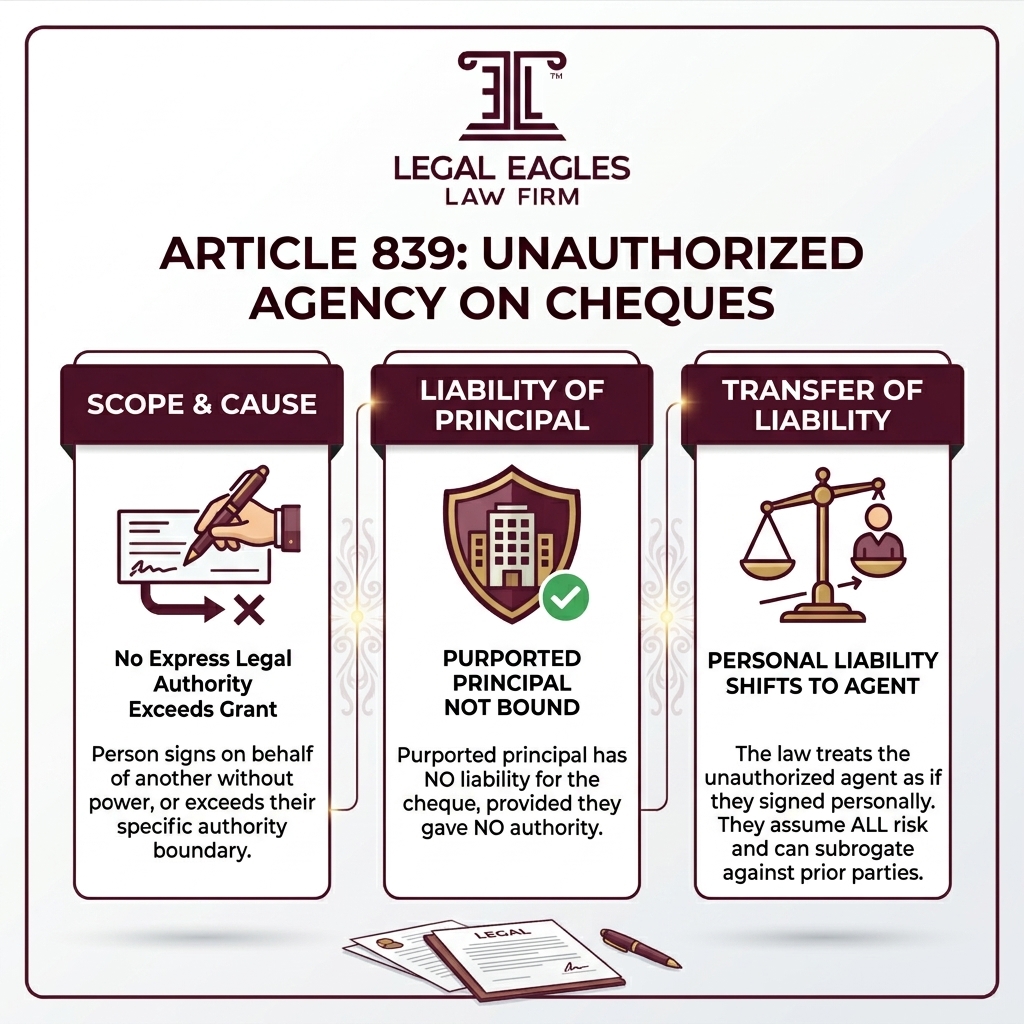
- Scope and Triggering Conditions: Article 839 applies whenever an individual signs a cheque on behalf of a company or another person without express authority, or when an authorized signatory exceeds their explicit mandate (e.g., signing for an amount above their delegated approval limit).
- Complete Shield for the Principal: Article 839 grants the purported principal complete statutory immunity. If an individual signs a cheque in your firm’s name without authority, the company bears zero legal or financial obligation to honor it, provided you gave or implied no prior authority.
- Direct Transfer of Personal Liability: Rather than canceling the cheque, the law shifts full personal liability onto the unauthorized agent. The law treats the signing individual as if they issued the cheque in their own personal capacity, exposing their personal assets to claims from the holder.
- Subrogation and Recourse Rights: If the unauthorized agent pays the holder to settle the cheque, they step into the shoes of the principal inheriting all legal rights and remedies the principal would have held against prior parties or endorsers on the instrument.
Impact on Key Stakeholders
Principals and Companies
Article 839 protects businesses from unauthorized financial commitments. If an unapproved cheque surfaces, the company has no obligation to pay. To preserve this immunity, companies should promptly disavow unauthorized acts and assert their statutory protection.
Corporate Agents and Representatives
Officers, directors, and finance staff face severe personal risk if they sign financial instruments without clear, documented authority. Assuming power beyond written mandates or acting on verbal directives leaves the signer personally accountable for the full amount of the cheque.
Holders and Creditors
While a holder cannot enforce payment against the business, Article 839 provides a direct statutory cause of action against the individual signer. To prevent delays or litigation, payees should independently review corporate signature cards and powers of attorney before accepting high-value cheques.
Key Takeaways for Corporate Risk Management
- Establish Explicit Delegation Protocols: Maintain clear corporate mandates, joint-signatory rules, and financial caps in bank signature cards and powers of attorney.
- Verify Signatory Authority: When accepting cheques from corporate agents in major transactions, inspect relevant corporate authorization documents beforehand.
- Act Promptly on Discoveries: If someone draws an unauthorized cheque under your company’s name, seek legal counsel immediately to assert immunity under Article 839 and redirect claims to the signing party.