Import Compliance in Ethiopia’s manufacturing and Industrial Park Sector: A Legal Guide for Investors
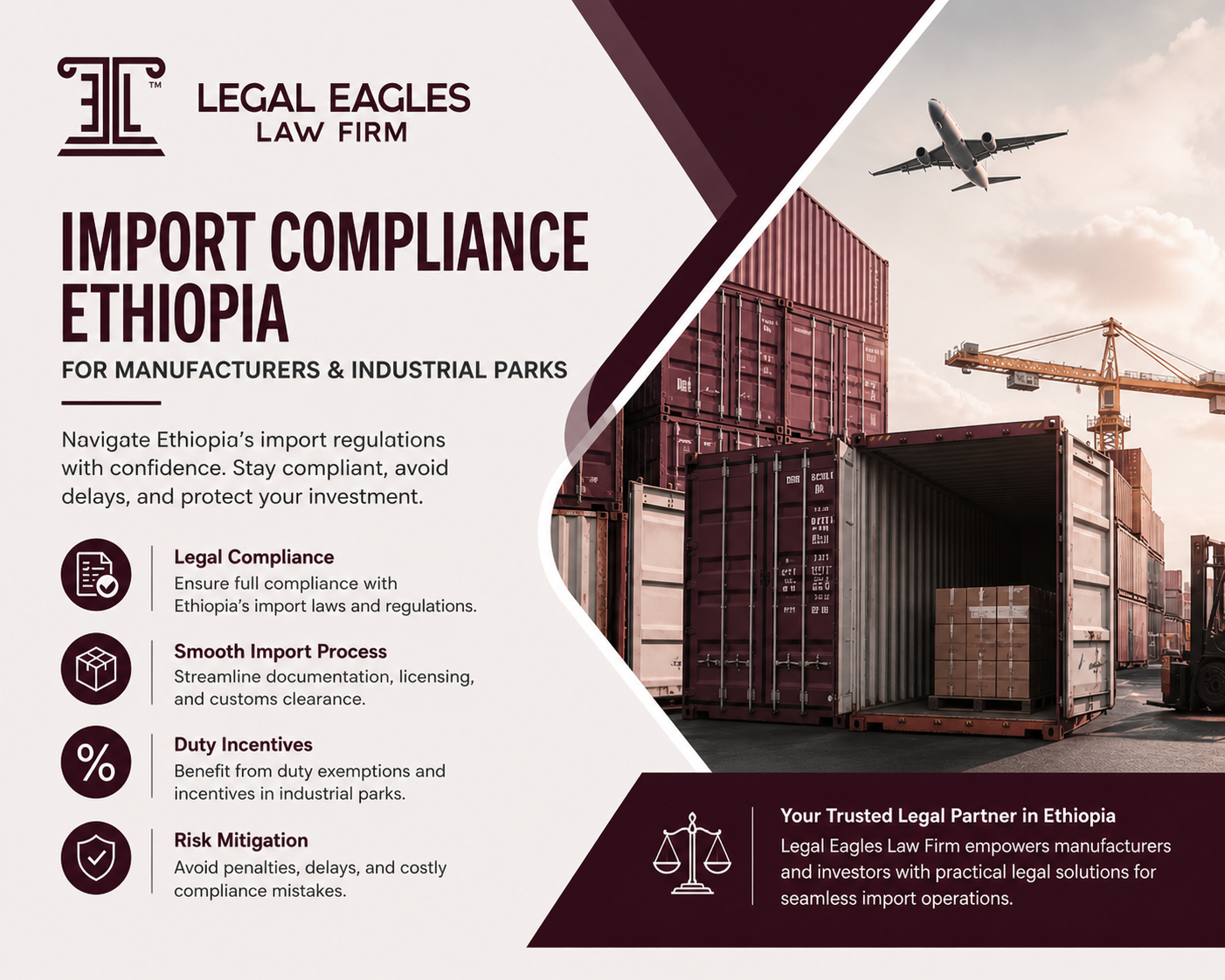
Ethiopia’s ambition to become a regional manufacturing hub has positioned industrial parks at the center of its economic transformation strategy. With strong government incentives, including duty-free import privileges and tax benefits, the sector offers significant opportunities for both domestic and foreign investors. However, routing import compliance requirements remains a critical legal and operational challenge.
1. Legal Framework Governing Import Compliance
Import compliance in Ethiopia’s manufacturing and industrial park sector is governed by a combination of investment, customs, and sector-specific laws.
The cornerstone legislation includes:
- Industrial Parks Proclamation No. 886/2015 – regulates the establishment, operation, and incentives of industrial parks
- Council of Ministers Regulation No. 417/2017 – provides detailed rules on industrial park administration and operations
- Investment Proclamation No. 1180/2020 – governs investment licensing and incentives
- Customs and Trade Regulations – governing import licensing, duties, and procedures
These laws collectively define the rights, obligations, and incentives for manufacturing enterprises operating within industrial parks.
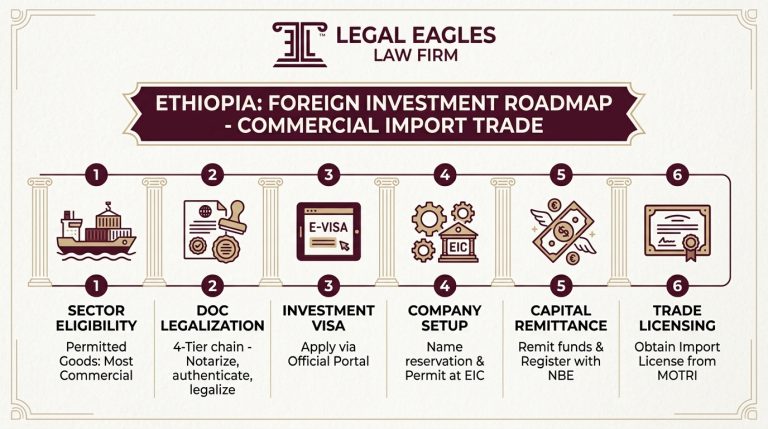
2. Import Licensing and Registration Requirements
Before importing any goods into Ethiopia, manufacturers must comply with strict registration and licensing requirements.
Key Requirements:
- Commercial Registration and Business License
All importers must first register their business and obtain a valid trade license aligned with their activities - Import License / Import Registration Number
A separate import authorization is required for bringing goods into the country - Investment Registration (for foreign investors)
Investors operating in industrial parks must register with the Ethiopian Investment Commission - Tax Identification Number (TIN)
Mandatory for all import-related transactions - Bank Authorization / Foreign Exchange Permit
Imports must be financed through Ethiopia’s banking system
Failure to secure any of the above can result in shipment delays, penalties, or confiscation of goods.
3. Documentation Requirements for Imports
Import compliance is heavily documentation-driven. Manufacturers must ensure that all required documents are accurate and complete.
Essential Import Documents:
- Commercial invoice
- Bill of lading / airway bill
- Certificate of origin
- Packing list
- Insurance certificate
- Customs declaration
- Import license
- Foreign exchange authorization
- Pre-shipment inspection certificate
Additional certifications may be required depending on the product category (e.g., food, pharmaceuticals, or chemicals).
4. Duty-Free Incentives for Manufacturing and Industrial Parks
One of the biggest advantages of operating in Ethiopia’s industrial parks is access to import duty exemptions.
Key Incentives:
- 100% customs duty exemption on capital goods and construction materials
- Duty-free import of spare parts (up to a specified percentage of capital goods value)
- Refund schemes for locally sourced inputs used in manufacturing
- Duty-free import privileges for manufacturing inputs and equipment
These incentives significantly reduce start-up and operational costs for manufacturers.
However, compliance conditions apply misuse of duty-free privileges can lead to penalties and revocation of benefits.
5. Sector-Specific Compliance Considerations
Manufacturing companies operating in industrial parks must also comply with additional regulatory requirements depending on their sector.
Examples:
- Chemical imports must comply with chemical registration laws
- Food and pharmaceuticals require approval from the Ethiopian Food and Drug Authority
- Machinery and industrial equipment may require technical standards certification
Non-compliance in these areas can lead to regulatory sanctions or import restrictions.
6. Common Compliance Risks and Challenges
Despite the incentives, import compliance in Ethiopia presents several practical challenges:
- Foreign Exchange Constraints
Access to foreign currency can delay import transactions.
- Regulatory Complexity
Multiple institutions (customs, trade, investment, sector regulators) create overlapping compliance requirements.
- Documentation Errors
Incomplete or inaccurate documentation is a leading cause of delays.
- Changing Regulatory Environment
Import procedures and directives are subject to frequent updates.
- Misuse of Duty-Free Privileges
Improper use of incentives can result in penalties, audits, or revocation of licenses.
7. Best Practices for Ensuring Import Compliance
To minimize risk and ensure smooth operations, manufacturers should adopt the following:
- Conduct legal due diligence before importing
- Maintain accurate and consistent documentation
- Work with licensed customs clearing agents
- Regularly monitor regulatory updates
- Implement internal compliance systems
- Seek legal advisory services for complex imports
8. The Role of Legal Advisory in Import Compliance
Given the complexity of Ethiopia’s import regime, legal guidance is essential for:
- Structuring import operations
- Securing licenses and permits
- Ensuring compliance with industrial park regulations
- Managing disputes with customs or regulatory authorities
At Legal Eagles Law Firm, we assist manufacturing and industrial park investors in navigating Ethiopia’s import compliance landscape ensuring efficiency, risk mitigation, and full regulatory alignment.