The Digital Shift in Tax Compliance: Understanding Ethiopia’s New Electronic Invoicing System Directive No. 1142/2026
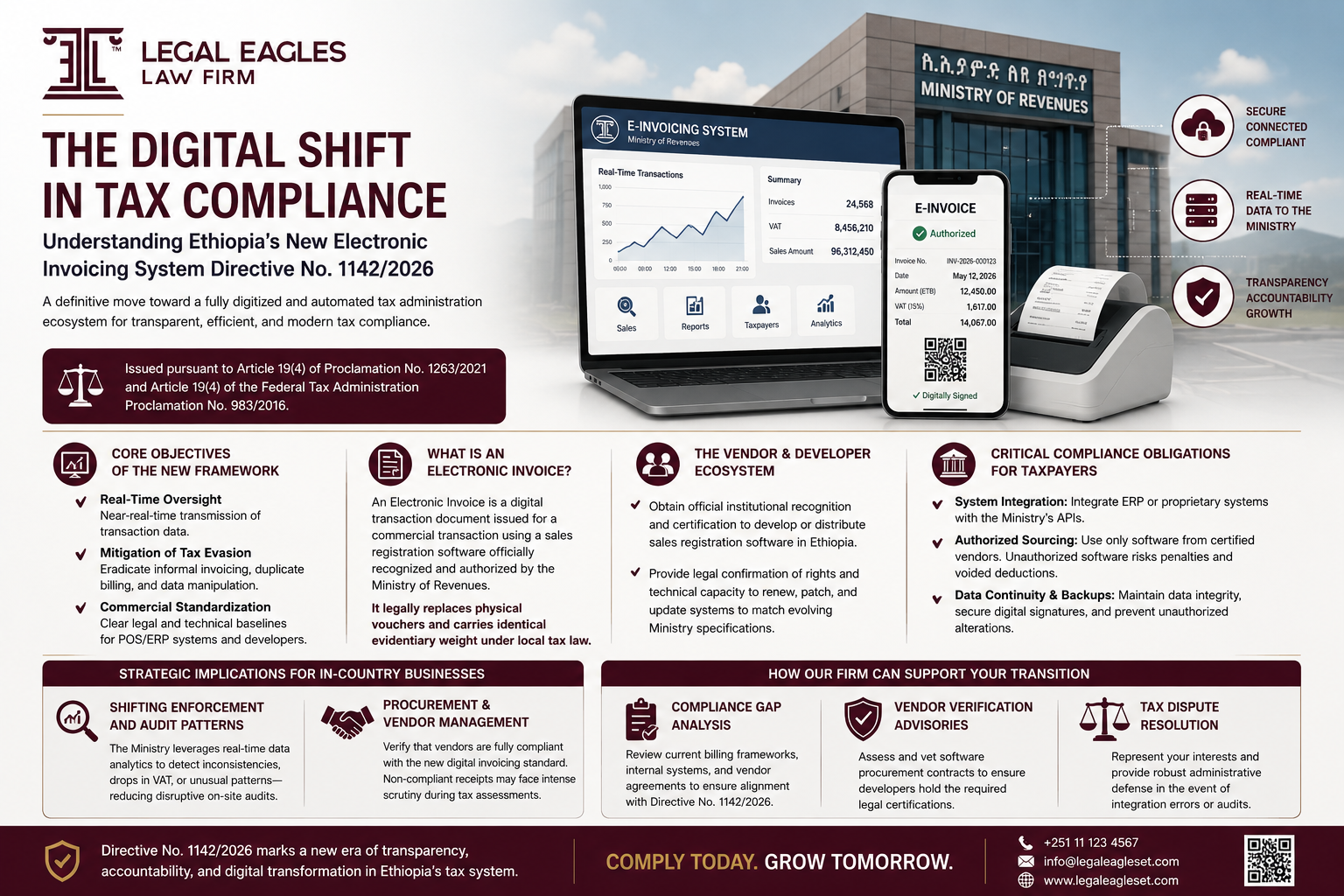
The Ministry of Revenues has officially issued a new law. Specifically, it has enacted the Electronic Invoicing System Administration Directive No. 1142/2026. This landmark change aims to build a fully digitized and automated tax administration ecosystem. Consequently, this directive completely transforms the regulatory landscape for domestic commercial transactions. The state is now systematically phasing out traditional, isolated physical cash register vouchers. Instead, it is adopting an integrated, real-time digital reporting infrastructure.
This law was promulgated pursuant to clear statutory authority. Specifically, it relies on Article 19(4) of the Definition of Powers and Duties of the Executive Organs Proclamation No. 1263/2021. In addition, it draws from Article 19(4) of the Federal Tax Administration Proclamation No. 983/2016. As a result, this Directive establishes a mandatory, rigorous framework for electronic sales registration and monitoring. For businesses operating in Ethiopia, the enactment of Directive No. 1142/2026 represents a comprehensive overhaul. Therefore, it completely reshapes daily accounting, invoicing, and tax reporting requirements.
Core Objectives of the New Framework
The Ministry of Revenues, in coordination with relevant technological organs like the Information Network Security Administration (INSA), has designed this system to address systemic vulnerabilities in the existing tax collection infrastructure. The directive targets several key pillars:
- Real-Time Oversight: Transitioning from retrospective monthly reporting to near-real-time data transmission of transaction data directly to the Ministry’s centralized servers.
- Mitigation of Tax Evasion: Eradicating the prevalence of informal invoicing, duplicate billing practices, and the manual manipulation of sales data.
- Commercial Standardization: Providing clear legal and technical baselines for taxpayers who develop internal point-of-sale (POS) systems or purchase them from third-party developers.
Key Legal Definitions & System Architecture
1. What Constitutes an “Electronic Invoice”?
Under Section One of Directive No. 1142/2026, an Electronic Invoice is explicitly defined as a digital transaction document issued for a commercial transaction using a sales registration software officially recognized and authorized by the Ministry of Revenues. It legally replaces physical paper vouchers and carries identical evidentiary weight under local tax law.
2. The Vendor and Developer Ecosystem
The directive introduces strict regulatory control over the technology supply chain. Software developers, consultants, and IT service providers specializing in accounting or POS software must now:
- Obtain official institutional recognition and certification to develop or distribute sales registration software within Ethiopia.
- Provide concrete, legal confirmation of their rights and technical capacity to consistently renew, patch, and update authorized systems to match evolving Ministry specifications.
Critical Compliance Obligations for Taxpayers
For corporate entities, manufacturing firms, and retail operations, adapting to directive 1114/2026 requires looking beyond basic accounting updates to ensure full systemic alignment. Key obligations include:
- System Integration: Businesses utilizing bespoke or proprietary ERP (Enterprise Resource Planning) software must configure their digital architectures to seamlessly interface with the Ministry’s APIs.
- Authorized Sourcing: Taxpayers are legally prohibited from purchasing or deploying invoicing software from uncertified vendors. Any transactions recorded on unauthorized software risk being voided for tax deduction purposes, exposing the firm to severe penalties.
- Data Continuity and Backups: Businesses must take proactive precautions to maintain data integrity, secure digital signatures, and prevent unauthorized alterations to the digital sales ledger.
Strategic Implications for In-Country Businesses
Shifting Enforcement and Audit Patterns
The introduction of Directive No. 1142/2026 signals a move away from traditional, disruptive on-site physical tax audits. With immediate access to transactional data, the Ministry of Revenues can leverage automated data analytics to flag inconsistencies, sudden drops in reported VAT, or unusual transaction patterns remotely.
Procurement and Vendor Management
Corporations must audit their current supply chains. When procuring goods or services, businesses must verify that their vendors are fully compliant with the new digital invoicing standard, as non-compliant or manually issued receipts from high-turnover suppliers may face intense regulatory scrutiny during corporate tax assessments.
How Our Firm Can Support Your Transition
Navigating the technicalities of a newly introduced tax directive requires a blend of legal expertise and operational foresight. Our team is actively assisting clients through:
- Compliance Gap Analysis: Reviewing your current billing frameworks, internal sales software, and third-party vendor agreements to ensure alignment with Directive No. 1142/2026.
- Vendor Verification Advisories: Assessing and vetting software procurement contracts with local IT developers to ensure they possess the necessary legal certifications under Section One of the Directive.
- Tax Dispute Resolution: Representing corporate interests and providing robust administrative defense in the event of systemic integration errors or disputes arising from transition-period audits.