Taxing the Digital Economy: How Regulation No. 597/2026 Updates Regulation No. 410/2017 for Content Creators and Freelancers
Ethiopia’s digital economy has grown rapidly over the past decade. This rapid growth has outpaced traditional tax frameworks.The Council of Ministers issued Regulation No. 410/2017 to implement Proclamation No. 979/2016. That framework focused mainly on traditional commerce, standard employment, and presumptive businesses. Digital content creation, remote freelancing, and online monetization remained largely unaddressed. This left creators, platforms, and tax officials navigating gray areas.
Federal Income Tax (Amendment) Regulation No. 597/2026 changes this landscape. It formally integrates the digital economy into Ethiopia’s tax regime. Below is an analysis of how the 2026 amendment updates Regulation No. 410/2017. It focuses on digital creators, freelancers, and online platforms.
1. Bridging the Definitional Gap in Regulation No. 410/2017
Under the original text of Regulation No. 410/2017, Article 2 contained no definitions tailored to digital platforms or online monetization. Similarly, the presumptive tax schedules attached to the 2017 Regulation omitted digital content creation as a recognized business activity.
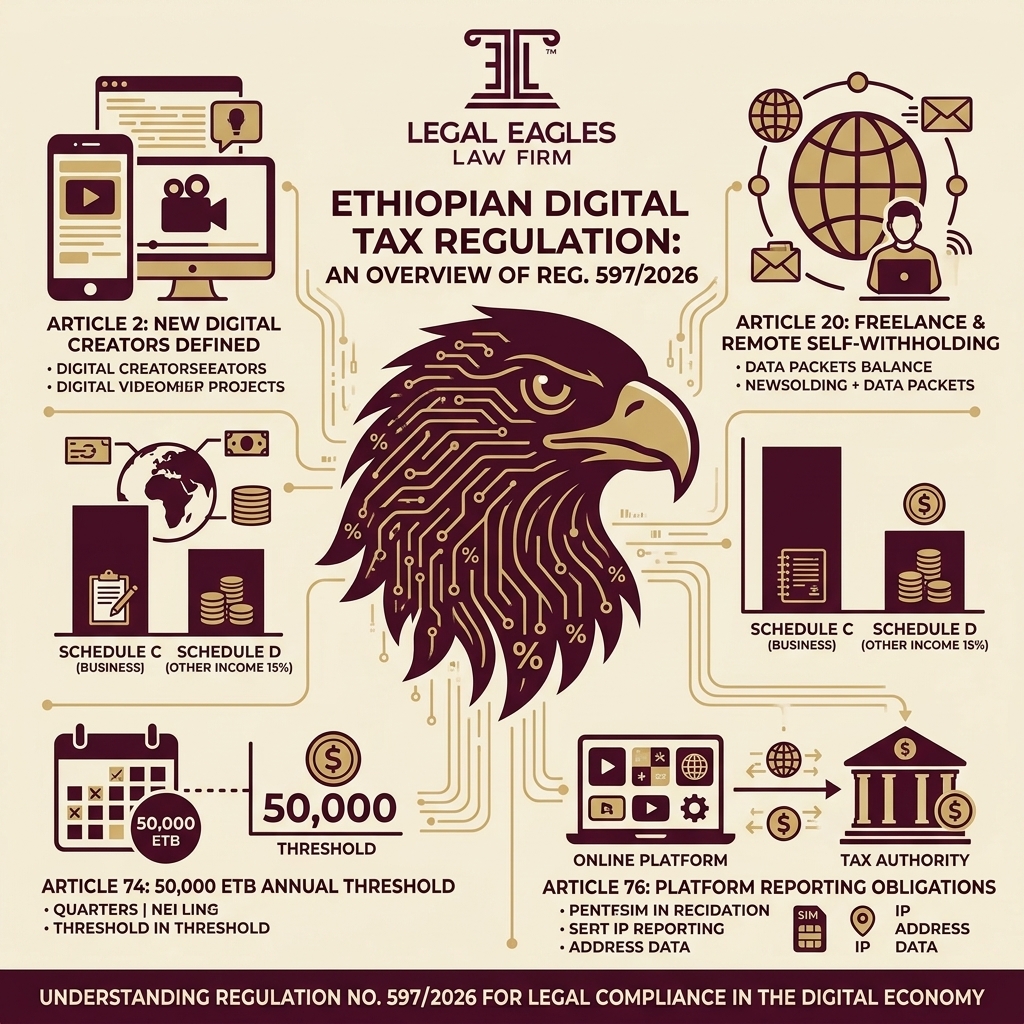
Regulation No. 597/2026 fixes this by adding Sub-Article (2) to Article 2. This introduces a broad definition for online payment platforms. This rule covers websites, apps, electronic marketplaces, social media, and live-streaming services. It applies if they host content and perform any of these functions:
- Executes payments or extends credit to the creator;
- Collects, receives, manages, or facilitates payments on the creator’s behalf; or
- Determines, calculates, or reports earnings derived from advertising, membership fees, sponsorships, royalties, tips/bonuses, donations, commissions, sales, or licensing.
2. Capturing Freelance and Remote Services (Amendment to Article 20)
Under Regulation No. 410/2017, Article 20 governed self-withholding tax obligations. However, it did not explicitly address borderless remote work.
Regulation No. 597/2026 adds Sub-Article (2) to Article 20. It extends self-withholding rules to digital, freelance, and remote business income. This removes any ambiguity regarding whether income earned remotely from international clients is subject to domestic reporting and withholding compliance.
3. Dual Taxation Pathways: Schedule “C” vs. Schedule “D”
Regulation No. 597/2026 avoids a one-size-fits-all tax structure. Instead, it adds two distinct sub-sections to Regulation No. 410/2017:
- Business Income Tax under Schedule “C” (Articles 55–56): Creators meeting the Proclamation’s business criteria pay standard Schedule “C” tax rates. They must keep accurate accounts of all cash and non-cash earnings. Valid records include platform statements, gift logs, sponsorship contracts, and bank statements.
- Other Income Tax under Schedule “D” (Articles 72–77): Resident creators outside Schedule “C” pay a flat 15% tax under Schedule “D”. Under Article 73(3), holding foreign accounts does not exempt Ethiopian residents from tax.
4. The 50,000 Birr Threshold, Quarterly Filing, and TIN Rules
Recognizing the varying scale of emerging digital creators, Article 74 establishes a protective income threshold for Schedule “D” taxpayers:
- Tax liability is triggered only when a creator’s annual gross income exceeds Birr 50,000 but a threshold the Ministry of Finance may adjust via directive to account for purchasing power.
- If a creator’s annual digital income does not exceed Birr 50,000, any tax already paid during the year is either credited against future tax liabilities or refunded.
For compliance administration under Schedule “D”:
- Quarterly Declarations (Article 75): Creators must declare their income and remit taxes every quarter (commencing from July 7 of each tax year), with payments due within 30 days following the end of each quarter.
- Simplified Withholding Documentation (Article 92): Amending former Article 63 of Regulation No. 410/2017, the new Article 92(2) eases administrative friction at the point of withholding. While general businesses must present both a Taxpayer Identification Number (TIN) and a valid business license, individual digital content creators (alongside individual building lessors) are only required to present their TIN when tax is withheld from their payments.
5. Platform Reporting Obligations and Enforcement (Articles 76–77)
Perhaps the most consequential departure from the 2017 regulatory framework is the imposition of direct reporting duties on digital intermediaries. Under Article 76, online platforms and advertising entities that facilitate payments to digital content creators must submit quarterly reports to the Tax Authority. Using payment request origins, SIM card data, IP addresses, and other identifying records, platforms must disclose the names, addresses, and exact payout amounts of creators resident in Ethiopia. Furthermore, Article 77 mandates the Tax Authority to actively monitor digital creator activities and collaborate with both domestic and international digital service platforms to verify income data.
Key Takeaways for Creators and Businesses
By amending Regulation No. 410/2017, Regulation No. 597/2026 transitions Ethiopia’s digital sector from regulatory ambiguity to structured formalization. Content creators, influencers, and remote professionals earning above Birr 50,000 annually should ensure they are registered with a TIN, maintain comprehensive records of both cash and in-kind sponsorships, and align their quarterly declarations with either Schedule “C” or Schedule “D” requirements.