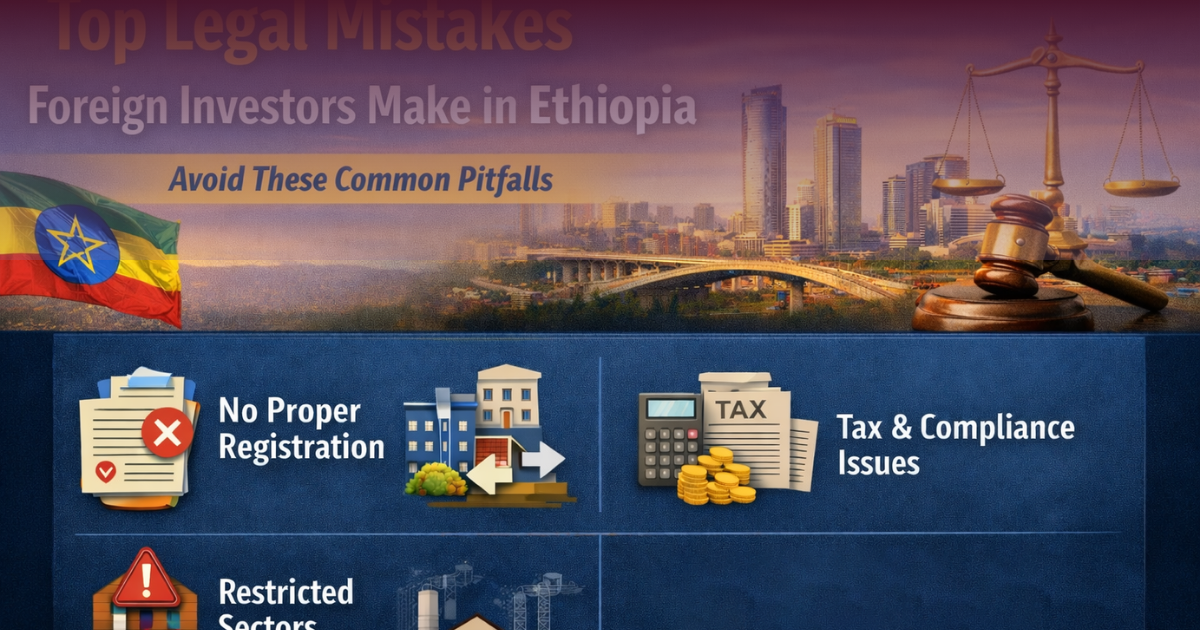
Top Legal Mistakes Foreign Investors Make in Ethiopia
Ethiopia has become an increasingly attractive destination for foreign investment due to its large market, strategic location, and on-going economic reforms. However, exploring the legal and regulatory environment can be complex for foreign investors unfamiliar with Ethiopian laws and procedures.
Many investors encounter delays, financial losses, or regulatory penalties because of avoidable legal mistakes. Understanding these common pitfalls can help investors protect their businesses and operate successfully in Ethiopia.
Below are some of the most common legal mistakes foreign investors make in Ethiopia.
Starting Business Activities Without Proper Investment Registration
One of the most common mistakes foreign investors make is beginning operations before obtaining the required investment permits and licenses.
Under Ethiopian investment laws, foreign investors must first obtain an investment permit from the Ethiopian Investment Commission (EIC) and complete company registration before conducting business activities.
Failure to complete these procedures may lead to penalties, operational restrictions, or the suspension of business activities.
Choosing the Wrong Business Structure
Foreign investors often fail to carefully select the most appropriate legal structure for their business.
In Ethiopia, investors may establish businesses as:
- Private Limited Companies (PLC)
- Share Companies
- Branch offices of foreign companies and others.
Each structure has different legal requirements, liability rules, and management structures. Choosing the wrong structure can create unnecessary legal complications and financial burdens.
Ignoring Sector Restrictions for Foreign Investors
Ethiopian investment law restricts or regulates foreign participation in certain economic sectors.
Some sectors are:
- Reserved exclusively for Ethiopian nationals
- Open only through joint ventures with local investors
- Fully open to foreign investment
Investors who fail to verify sector eligibility may face rejection of their investment application or regulatory challenges.
Poorly Drafted Commercial Contracts
Contracts play a crucial role in business operations, including agreements with suppliers, partners, and employees.
Foreign investors sometimes rely on informal agreements or poorly drafted contracts that do not comply with Ethiopian law. This can lead to disputes, enforcement difficulties, and financial losses.
Having contracts reviewed by a legal professional familiar with Ethiopian commercial law can significantly reduce these risks.
Non-Compliance with Employment Laws
Ethiopian labour law contains strict rules regarding:
- employment contracts
- termination procedures
- employee rights and benefits
Foreign investors who fail to comply with these regulations may face labour disputes, administrative penalties, or court litigation.
Proper legal guidance helps businesses establish compliant employment policies from the beginning.
Failure to Understand Tax and Regulatory Obligations
Another frequent mistake is misunderstanding tax registration, reporting obligations, and regulatory compliance requirements.
Businesses operating in Ethiopia must comply with tax laws, including:
- income tax obligations
- value-added tax (VAT) requirements
- withholding tax rules
Failure to comply with these obligations may result in financial penalties or legal liability.
Conclusion
Ethiopia presents significant investment opportunities, but foreign investors must carefully navigate the country’s legal and regulatory framework.
Avoiding common legal mistakes such as failing to obtain proper permits, misunderstanding sector restrictions, or neglecting compliance obligations can help investors establish stable and successful businesses.
Seeking legal advice from experienced professionals can significantly reduce risks and ensure compliance with Ethiopian laws and regulations.
For investors looking to establish or expand their business in Ethiopia, working with a qualified law firm in Addis Ababa can provide valuable guidance throughout the investment process.