Real Estate Investment in Ethiopia: A Guide for Foreign Investors
The Real Estate Proclamation governs land use, real estate development, construction, leasing, and property management in Ethiopia. It is built on the constitutional principle that land is publicly owned, meaning that land itself cannot be privately owned by Ethiopians or foreign nationals.
Accordingly, the proclamation regulates:
- Government land leasing systems
- Zoning and land-use compliance
- Construction permits and development standards
- Rights and obligations of real estate developers
For foreign investors, this proclamation determines how property is developed and managed, but it does not, by itself, grant investment status or incentives.
The Role of the Investment Proclamation for Foreign Investors
The Ethiopian Investment Proclamation is the legal instrument that enables foreign investors in Ethiopia to lawfully enter the real estate sector. It recognizes real estate development as an eligible investment activity and establishes:
- Eligibility and minimum capital requirements for foreign investors
- Mandatory investment registration with the Ethiopian Investment Commission
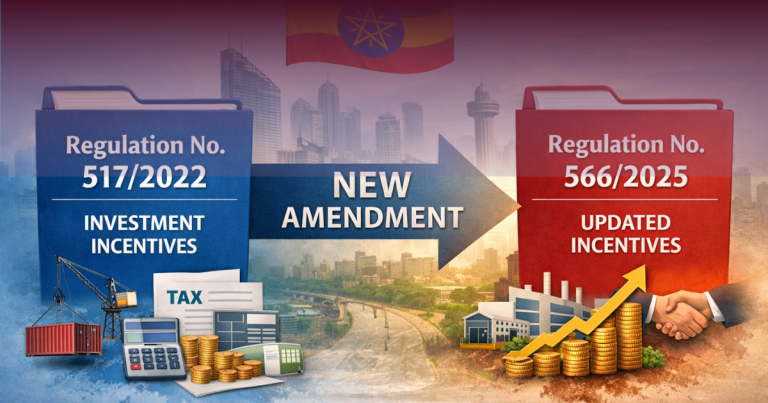
- Access to investment incentives, including tax holidays and customs duty exemptions
- Guarantees on profit repatriation and protection against expropriation
In practice, any real estate project undertaken by a foreign investor must first qualify and be registered under the Investment Proclamation. Without investment registration, foreign participation in real estate development lacks legal and financial protection.
Foreign Ownership of Residential Houses Under Proclamation No. 1388/2025
Proclamation No. 1388/2025 introduced a major policy shift by allowing foreign nationals to own residential houses in Ethiopia, subject to conditions. This development does not contradict the Real Estate Proclamation or the Investment Proclamation, because:
- Ownership applies only to the residential structure, not the land
- The land remains publicly owned and is held under a lease arrangement
- Acquisition of residential property by foreign nationals must still comply with investment and regulatory requirements
For foreign investors, this means that residential real estate ownership is now legally possible, provided that the investment is properly registered and compliant with all applicable laws.
How the Three Proclamations Operate Together
When read together, the legal framework operates as follows:
- The Real Estate Proclamation regulates land use, leasing, construction, and development standards
- The Investment Proclamation authorizes foreign participation, provides investor protections, and grants access to incentives
- Proclamation No. 1388/2025 allows foreign nationals to own residential houses developed on leased land
This integrated framework ensures that real estate investment in Ethiopia by foreign investors is constitutionally compliant, legally secure, and economically incentivized.
Why Legal Advice Is Essential
Navigating Ethiopia’s real estate sector requires careful coordination between investment registration, land leasing, development approvals, and ownership rules. At Legal Eagles Law Firm, recognized among the top real estate lawyers in Ethiopia, we advise foreign investors on:
- Structuring real estate investments under the Investment Proclamation
- Securing land leases and development approvals
- Compliance with Proclamation No. 1388/2025 for residential property ownership
- Risk mitigation and regulatory compliance
Conclusion
For foreign investors, successful real estate investment in Ethiopia depends on understanding the Real Estate Proclamation in light of the Investment Proclamation, together with the new rights introduced under Proclamation No. 1388/2025. When properly structured, the current legal framework offers both security and opportunity. Partnering with an experienced legal advisor ensures that investments are lawful, protected, and positioned for long-term success.