Prospectus Liability in Ethiopia’s Emerging Capital Market: Legal Risks for Issuers and Advisors
With the operationalization of the Ethiopian Capital Market Authority, Ethiopia is entering an era where companies can raise capital from the public through regulated securities offerings. At the center of this process lies one critical legal document: the prospectus.
While often treated as a disclosure formality, the prospectus carries significant legal liability. Misstatements, omissions, or misleading representations can expose issuers and potentially their advisors to regulatory sanctions and civil claims.
This raises a key question: How developed is prospectus liability under Ethiopian law, and who bears the risk when disclosures fail?
1. The Prospectus as a Legal Instrument (Not Just Disclosure)
In mature markets, a prospectus is not merely informational it is a legally binding representation to investors.
Under emerging Ethiopian capital market rules, the prospectus is expected to include:
- Financial statements
- Risk factors
- Business operations and governance structures
However, the law is still evolving on a crucial point:
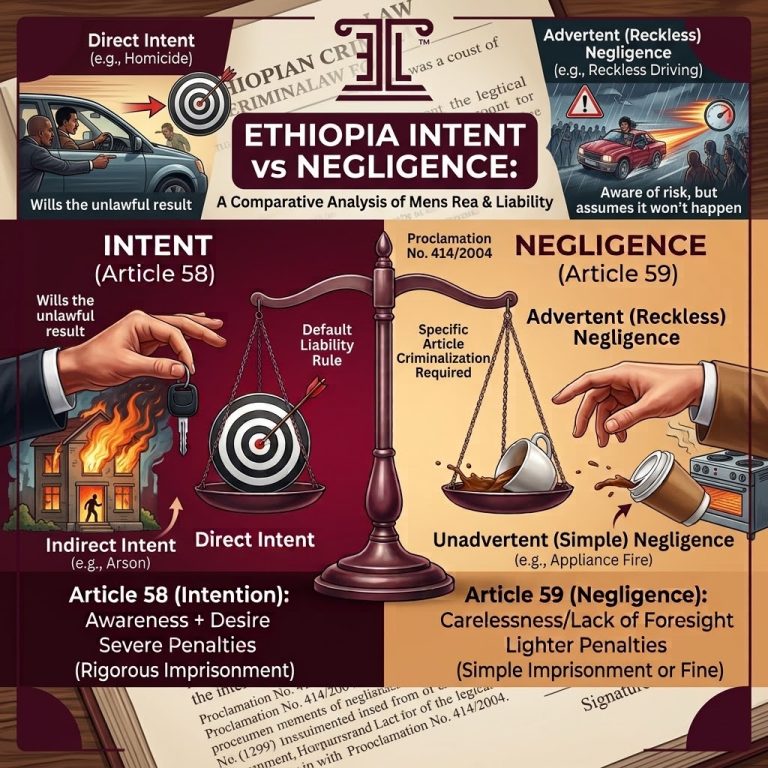
Does liability arise only for intentional misrepresentation, or also for negligence?
This distinction is fundamental. A negligence-based standard significantly expands exposure for issuers and advisors.
2. Who Bears Liability? A Structural Gap
In jurisdictions like those overseen by the U.S. Securities and Exchange Commission, liability is clearly distributed among:
- The issuing company
- Directors and senior management
- Underwriters and advisors
In Ethiopia, this allocation is less clearly articulated in practice, creating uncertainty around:
- Whether board members face personal liability
- The extent of due diligence required from legal and financial advisors
- The standard of care expected from auditors
This ambiguity increases transactional risk especially for first-time issuers.
3. Misrepresentation vs Omission: The Harder Problem
Most legal systems treat false statements and material omissions differently.
- False statements → easier to prove
- Omissions → require proving that the missing information was material
The challenge in Ethiopia is that:
- There is limited jurisprudence defining “materiality”
- Regulatory guidance is still developing
This creates a practical risk:
Issuers may comply formally, yet still face liability for failing to disclose what regulators later consider “material.”
4. Enforcement Reality: Law vs Capacity
Even where rules exist, enforcement determines real risk.
The Ethiopian Capital Market Authority has broad supervisory powers, but faces typical early-stage constraints:
- Limited precedent in securities litigation
- Developing investigative capacity
- Absence of a strong compliance culture
This creates a paradox:
- Short term → lower enforcement risk
- Long term → high retrospective liability as the system matures
5. Practical Risk for Ethiopian Companies
For companies considering public offerings, the legal risks are not theoretical:
- Overstating growth projections
- Under-disclosing operational risks
- Using vague or boilerplate language
These practices is common in early markets and can later become grounds for:
- Regulatory penalties
- Investor claims
- Reputational damage that affects future fundraising
6. The Missing Piece: Due Diligence Culture
One of the biggest gaps is not legal text but market behaviour.
In mature systems, prospectus preparation involves:
- Extensive legal due diligence
- Verification of every material statement
- Clear documentation of risk disclosures
In Ethiopia, this culture is still forming. That creates a critical role for legal advisors: Not just drafting documents but actively stress-testing disclosures.
Conclusion
Prospectus liability will likely become one of the first major legal battlegrounds in Ethiopia’s capital market development.
While the regulatory framework is in place, key questions remain unresolved:
- The standard of liability
- Allocation of responsibility
- Interpretation of material disclosure
For issuers, the message is clear: Treat the prospectus as a legal risk document, not a marketing tool.