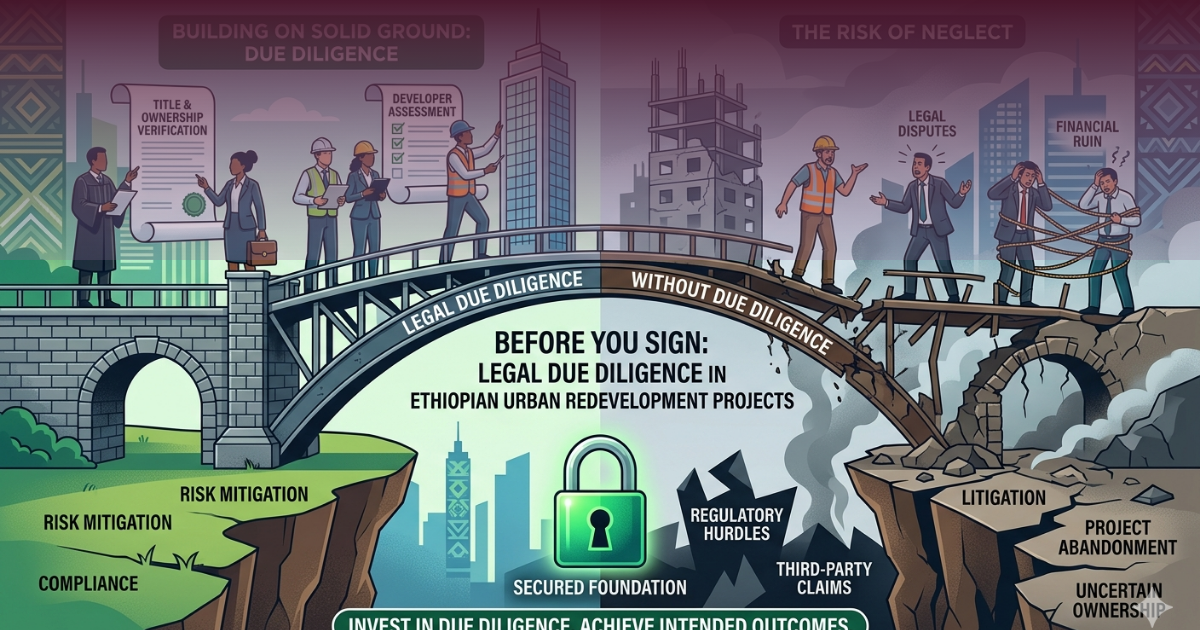
Before You Sign: Legal Due Diligence in Ethiopian Urban Redevelopment Projects
Urban redevelopment in Ethiopia particularly in Addis Ababa is creating significant opportunities for both landowners and real estate developers. However, behind every successful redevelopment project lays a critical but often overlooked step: legal due diligence.
Entering into a redevelopment agreement without proper due diligence can expose parties to serious legal, financial, and operational risks. What appears to be a promising partnership can quickly become a source of dispute if key issues are not identified early.
1. Verification of Land Title and Ownership
The first and most fundamental step is confirming the legal status of the land. This includes:
- Verifying title or holding rights
- Ensuring the land is free from disputes or competing claims
- Confirming there are no encumbrances, restrictions, or government claims
In Ethiopia, land is owned by the state, and individuals hold use rights. Any uncertainty in these rights can directly affect the validity of the entire redevelopment agreement.
2. Assessment of the Developer’s Legal and Financial Capacity
Landowners must carefully evaluate the developer beyond surface-level promises.
Key considerations include:
- Business registration and licensing status
- Financial capacity and access to funding
- Track record in similar projects
- Pending legal disputes or liabilities
A developer without sufficient capacity may delay or abandon the project leaving landowners exposed.
3. Regulatory and Permit Compliance
Urban redevelopment projects are highly regulated. Before entering into an agreement, parties must assess:
- Zoning and land use restrictions
- Building and construction permits
- Environmental and municipal approvals
Failure to secure proper approvals can halt a project entirely even after significant investment.
4. Valuation and Contribution Analysis
One of the most sensitive aspects of redevelopment deals is determining the value of each party’s contribution.
Due diligence should address:
- Accurate valuation of land
- Cost of construction and development
- Profit-sharing ratios
Without a clear and fair valuation, disputes are almost inevitable.
5. Review of Existing Obligations and Third-Party Interests
The land or project may already be subject to obligations involving third parties.
This includes:
- Existing tenants or occupants
- Prior agreements with contractors or financiers
- Utility or infrastructure commitments
Ignoring these factors can lead to legal complications during project execution.
6. Contractual Risk Assessment
Before signing, the agreement itself must be carefully reviewed to ensure it properly addresses:
- Roles and responsibilities of each party
- Project timelines and milestones
- Penalties for delay or non-performance
- Dispute resolution mechanisms (including arbitration options)
- Exit and termination clauses
A weak contract is one of the primary causes of redevelopment disputes.
Conclusion
Due diligence is not just a preliminary step it is the foundation of a successful redevelopment project. In Ethiopia’s evolving urban landscape, parties that invest time in proper legal assessment are far more likely to avoid disputes and achieve their intended outcomes.
========================================================================================================================
ከመፈረምዎ በፊት፦በኢትዮጵያ የከተማ መልሶ ማልማት ፕሮጀክቶች ላይ ሊደረግ የሚገባ የሕግ ምርመራ(Legal Due Diligence)
በኢትዮጵያ በተለይም በአዲስ አበባ እየተከናወነ ያለው የከተማ መልሶ ማልማት ለባለይዞታዎችም ሆነ ለሪል እስቴት አልሚዎች ከፍተኛ ዕድሎችን እየፈጠረ ይገኛል። ሆኖም ግን፣ ከእያንዳንዱ ስኬታማ የማልማት ፕሮጀክት ጀርባ ብዙ ጊዜ ትኩረት የማይሰጠው ነገር ግን ወሳኝ የሆነ አንድ ቅድመ ሁኔታ አለ፤ እርሱም የሕግ ምርመራ(Legal Due Diligence) ነው።
ተገቢውን የሕግ ምርመራ ሳያደርጉ ወደ መልሶ ማልማት ስምምነት መግባት ወገኖችን ለከፍተኛ የሕግ፣ የገንዘብ እና የአሠራር አደጋዎች ሊያጋልጥ ይችላል። ዋና ዋና ጉዳዮች አስቀድመው ካልተለዩ፣ ተስፋ ሰጪ የሚመስል አጋርነት በፍጥነት ወደ አለመግባባት ምንጭነት ሊቀየር ይችላል።
1. የመሬት ባለቤትነትን እና የይዞታ መብትን ማረጋገጥ
የመጀመሪያው እና መሠረታዊው እርምጃ የመሬቱን ሕጋዊ ሁኔታ ማረጋገጥ ነው። ይህም የሚከተሉትን ያካትታል፦
- የይዞታ ማረጋገጫ ካርታ ወይም የይዞታ መብቶችን ማረጋገጥ፤
- መሬቱ ከማንኛውም ክርክር ወይም ተደራራቢ የይዞታ ጥያቄ ነፃ መሆኑን ማረጋገጥ፤
- በመሬቱ ላይ ምንም ዓይነት ዕገዳ፣ ገደብ ወይም የመንግሥት ጥያቄ አለመኖሩን ማረጋገጥ።
በኢትዮጵያ መሬት የመንግሥት ሲሆን ግለሰቦች የይዞታ (የመጠቀም) መብት አላቸው። በእነዚህ መብቶች ላይ የሚኖር ማንኛውም ብዥታ አጠቃላይ የመልሶ ማልማት ስምምነቱን ሕጋዊነት በቀጥታ ሊጎዳው ይችላል።
2. የአልሚውን ሕጋዊ እና የፋይናንስ አቅም መገምገም
ባለይዞታዎች አልሚውን ላዩን ከሚታዩ ቃላቶች ባለፈ በጥንቃቄ መገምገም አለባቸው። ዋና ዋናዎቹ ነጥቦች፦
- የንግድ ምዝገባ እና የፈቃድ ሁኔታ፤
- የፋይናንስ አቅም እና የገንዘብ ምንጭ፤
- በተመሳሳይ ፕሮጀክቶች ላይ ያለው የሥራ ልምድ፤
- ያልተጠናቀቁ የሕግ ክርክሮች ወይም ዕዳዎች።
በቂ አቅም የሌለው አልሚ ፕሮጀክቱን ሊያጓትት ወይም ሊያቋርጥ ይችላል፤ ይህም ባለይዞታውን ለአደጋ ያጋልጣል።
3. የሕግ እና የፈቃድ አከባበር (Compliance)
የከተማ መልሶ ማልማት ፕሮጀክቶች ከፍተኛ ቁጥጥር የሚደረግባቸው ናቸው። ስምምነት ከመፈረሙ በፊት ወገኖች የሚከተሉትን መመርመር አለባቸው፦
- የዞኒንግ (Zoning) እና የመሬት አጠቃቀም ገደቦች፤
- የሕንፃ እና የግንባታ ፈቃዶች፤
- የአካባቢ ጥበቃ እና የማዘጋጃ ቤት ፈቃዶች።
ተገቢውን ፈቃድ አለማግኘት፣ ከፍተኛ መዋዕለ ንዋይ ከፈሰሰ በኋላ እንኳ ፕሮጀክቱ ሙሉ በሙሉ እንዲቆም ሊያደርግ ይችላል።
4. የዋጋ ግምት እና የድርሻ ትንተና
በመልሶ ማልማት ስምምነቶች ውስጥ እጅግ ስሱ ከሆኑ ጉዳዮች አንዱ የእያንዳንዱ ወገን አስተዋጽኦ ዋጋ የሚወሰንበት መንገድ ነው። የሕግ ምርመራው የሚከተሉትን መመለስ አለበት፦
- ትክክለኛ የመሬት ዋጋ ግምት፤
- የግንባታ እና የማልማት ወጪ፤
- የትርፍ ክፍፍል ጥምርታ።
ግልጽ እና ፍትሐዊ የሆነ የዋጋ ግምት ከሌለ፣ አለመግባባቶች መፈጠራቸው የማይቀር ነው።
5. ነባር ግዴታዎችን እና የሦስተኛ ወገን ጥቅሞችን መመርመር
መሬቱ ወይም ፕሮጀክቱ ቀደም ሲል ከሦስተኛ ወገኖች ጋር በተያያዙ ግዴታዎች የተተበተበ ሊሆን ይችላል። ይህም የሚከተሉትን ያካትታል፦
- በይዞታው ላይ ያሉ ተከራዮች ወይም ነዋሪዎች፤
- ከሥራ ተቋራጮች ወይም ከአበዳሪዎች ጋር የተደረጉ የቀድሞ ስምምነቶች፤
- የመሠረተ ልማት (መብራት፣ ውኃ) ግዴታዎች።
እነዚህን ሁኔታዎች ችላ ማለት በፕሮጀክቱ አፈጻጸም ወቅት ለከፍተኛ የሕግ ውስብስብ ችግሮች ይዳርጋል።
6. የውል ስምምነት ስጋቶችን መገምገም
ከመፈረሙ በፊት ውሉ ራሱ የሚከተሉትን ነጥቦች በአግባቡ መሸፈኑ መረጋገጥ አለበት፦
- የእያንዳንዱ ወገን ሚና እና ኃላፊነት፤
- የፕሮጀክቱ የጊዜ ሰሌዳ እና ዋና ዋና ክንውኖች፤
- ለዘግይቶ መረከብ ወይም ለሥራ አፈጻጸም ጉድለት የሚጣሉ ቅጣቶች፤
- አለመግባባቶች የሚፈቱበት መንገድ (ሽምግልናን ጨምሮ)፤
- ውሉን የማቋረጫ መንገዶች።
ደካማ ውል ለመልሶ ማልማት ክርክሮች ዋነኛው መንስኤ ነው።
ማጠቃለያ
የሕግ ምርመራ (Due diligence) እንዲሁ ዝም ብሎ የሚደረግ የመጀመሪያ እርምጃ አይደለም—እርሱ የስኬታማ መልሶ ማልማት ፕሮጀክት መሠረት ነው። በኢትዮጵያ እየተለወጠ ባለው የከተማ ገጽታ ውስጥ፣ ለሕጋዊ ምዘና ጊዜ የሚሰጡ ወገኖች ከአለመግባባቶች የመዳን እና ያቀዱትን ውጤት የማግኘት ዕድላቸው ሰፊ ነው።