
Foreign Investment in Ethiopia 2026: Legal Guide for Investors | Legal Eagles Law Firm
Ethiopia continues to attract significant foreign direct investment (FDI), with recent agreements signed at the Invest in Ethiopia Forum totalling approximately $13.1 billion. These investments span across critical sectors such as renewable energy, manufacturing, mining, and real estate, involving major international companies including Sun King, Ming Yang Smart Energy Group, and Rashmi Group.
As Ethiopia opens its economy further, understanding the legal framework governing foreign investment is essential for successful market entry and operation.
Key Sectors Attracting Investment
Recent investment agreements highlight Ethiopia’s strategic priorities:
- Renewable Energy: Solar, hydrogen, and green energy infrastructure
- Manufacturing: Industrial parks and special economic zones
- Mining: Gold, lithium, and other mineral exploration
- Real Estate & Commercial Development
These sectors present high growth potential but are also subject to specific regulatory requirements.
Legal Requirements for Foreign Investors in Ethiopia
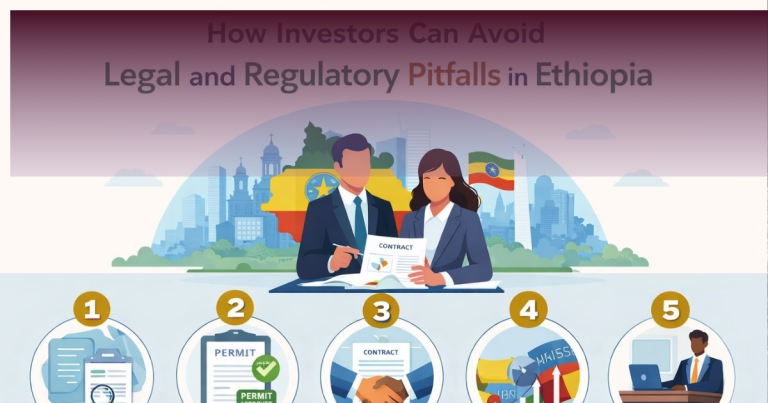
Foreign investors entering Ethiopia must comply with several legal and regulatory procedures, including:
- Investment Registration and Licensing
Investors must obtain an investment permit and register their business with the relevant authorities, primarily the Ethiopian Investment Commission.
- Business Incorporation
Foreign investors may establish:
- Wholly foreign-owned companies
- Joint ventures with local partners
- Branch offices (in limited cases)
- Sector-Specific Regulations
Certain sectors, particularly energy and mining, require additional approvals, permits, and compliance with environmental and operational standards.
- Land Acquisition
Land in Ethiopia is publicly owned. Investors obtain land through lease agreements, which require negotiation and regulatory approval.
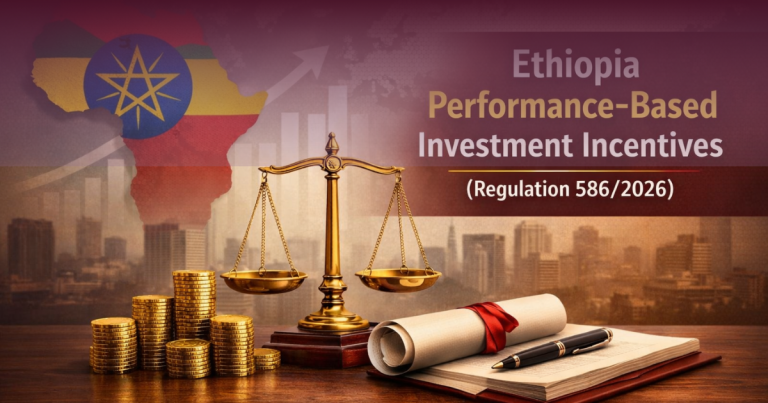
- Taxation and Incentives
Ethiopia offers various tax incentives, including:
- Income tax holidays
- Customs duty exemptions
- Export incentives
However, compliance with tax laws and reporting obligations is critical.
- Foreign Exchange and Repatriation
Foreign investors must comply with foreign exchange regulations governing:
- Capital inflows
- Profit repatriation
- Access to foreign currency
Common Legal Challenges
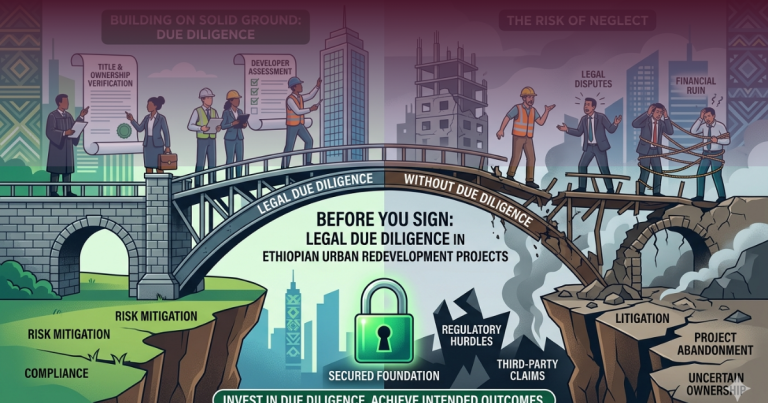
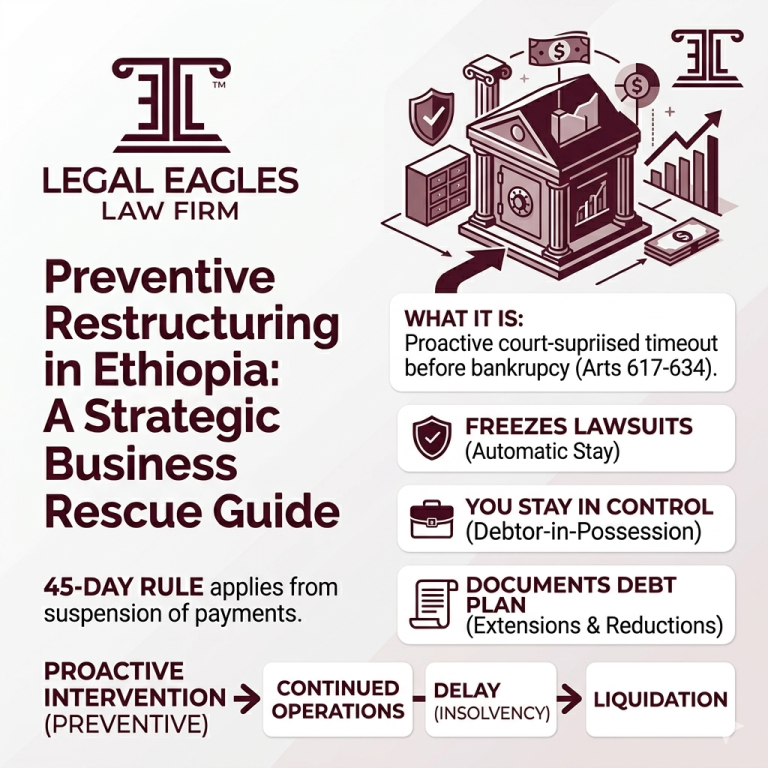
Despite the opportunities, investors often face challenges such as:
- Delays in licensing and approvals
- Regulatory complexity across sectors
- Foreign exchange limitations
- Contract enforcement issues
Proper legal planning significantly reduces these risks.
How Legal Eagles Law Firm Supports Investors
At Legal Eagles Law Firm, we provide comprehensive legal support to foreign investors, including:
- Investment structuring and advisory
- Licensing and regulatory compliance
- Contract drafting and negotiation
- Land lease and project development support
- On-going corporate and legal advisory
Our goal is to ensure that investors enter and operate in Ethiopia with confidence and legal certainty.
Conclusion
Ethiopia’s evolving investment landscape presents substantial opportunities for foreign investors. However, success depends on navigating the legal and regulatory environment effectively.
With the right legal partner, investors can mitigate risks, optimize their investments, and achieve sustainable growth in one of Africa’s fastest-growing markets.